
@Tactical Medicine Gear and Information
— · 47 videos curated
Tactical medical training and gear for emergency casualty care and household emergency preparedness.
All 47 videos

Your Car Kit Is Only Half Done: A Doctor's Vehicle Trauma Kit
Physician-led walkthrough of vehicle emergency kit setup for crash response: bleeding control, access tools, warmth, spinal precautions, storage tiers, and first-three-minutes priorities.

Seizure first aid: what not to do
49-second overview of seizure response: how to protect someone during an episode, when to call 911, and common mistakes to avoid.

Hotel Room Medical Audit: 5 Checks Before You Sleep
Five-step protocol for assessing a hotel room's medical emergency readiness: exit routes, contact procedures, medication positioning, and emergency communication setup.

Snakebite: Don't Tourniquet It
54-second breakdown of snakebite first aid: what NOT to do (tourniquet, suction, ice) and what actually works (immobilization, 911, marking swelling progression).
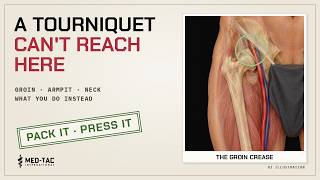
The Bleeding a Tourniquet Can't Reach: Groin, Armpit and Neck
Physician-led walkthrough of hemorrhage control for junctional wounds (groin, armpit, neck) that tourniquets cannot treat — techniques, evidence, and common mistakes.

Trauma Kit: Essentials for Your Shooting Range
Fifty-second checklist of minimum trauma-kit contents for shooting ranges, including tourniquet count and placement recommendations.

After the Shot: The First Three Minutes for an Injured Bystander
Physician-led walkthrough of immediate civilian response to a gunshot victim: scene safety, 911 coordination, bleeding control, airway management, shock prevention, and police/medic handoff.
Pressure points don't stop bleeding. Here's what does.
58-second breakdown of effective bleeding control: direct pressure, tourniquets, packing techniques, and why pressure points don't work in real casualties.

Wound Packing: Why You Fill the Wound Instead of Covering It
Physician walkthrough of wound packing technique for deep bleeding: where it works (groin, armpit, neck), where it doesn't, step-by-step packing method, and when to escalate care.
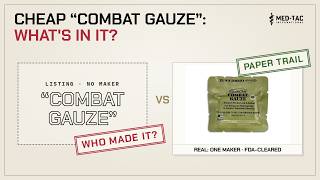
Hemostatic Gauze Ranked: Combat Gauze, Celox, QuikClot, and Fakes Compared
Physician compares nine hemostatic gauze brands and their knockoffs, explaining how kaolin and chitosan work, ranking them against clinical evidence (patient, animal, simulation, lab), and teaching how to verify authentic products.

What Belongs in a Trauma Kit, and What's Just Dead Weight
Eleven-minute breakdown of trauma kit essentials—tourniquets, hemostatic gauze, pressure bandages, chest seals—against ACS, AHA, and military guidelines, with evidence labels and a 30-second kit audit.

Anaphylaxis: the part most people miss
46-second walkthrough of anaphylaxis recognition and emergency response: when to use epinephrine, injection technique, positioning, and when to call 911.

Viral Bleeding Hacks Graded by Physician
Physician evaluates common emergency bleeding remedies (tampons, superglue, cayenne, duct tape) against medical evidence, explains what actually works, and when to use tourniquets or pressure packing.

Does Your Child Need a Tourniquet? Pediatric Bleeding, Escalated Correctly
Physician-led walkthrough of bleeding control in children: when tourniquets are warranted, the evidence-based ladder (hands, pack, wrap, tourniquet), sizing for small limbs, and school kit guidelines.

Drowning doesn't look like the movies. Here's what to do
How to recognize silent drowning, assign a water watcher, and perform rescue and CPR if needed.

Car crash: what to do first as a bystander
Bystander response to vehicle crashes: scene safety, emergency dispatch, basic casualty assessment, CPR, hemorrhage control, and hazard recognition.

How long until help arrives? EMS response times vs bleeding
National EMS response times (7 min median, 13+ min rural) vs. the narrow window for controlling life-threatening bleeds—why bystander intervention matters.

You've Called 911. Now What?
One-minute guide to maximizing emergency dispatcher effectiveness: location protocol, speaker setup, following instructions, and helping responders find you.
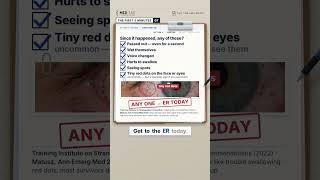
The First 5 Minutes, Ep. 07: Strangulation—Why "Fine" Isn't Fine
Recognition and emergency response for strangulation injury: why absence of marks doesn't mean absence of harm, which symptoms demand immediate ER care, and why delayed swelling or arterial damage can be fatal.
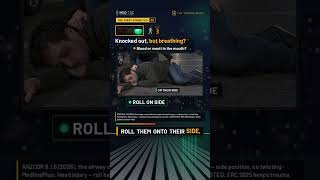
The First 5 Minutes, Ep. 06: Beaten (Blood in the Airway, Head-Injury Red Flags)
Emergency response to head trauma and blunt-force injury: airway management, signs of serious internal bleeding, and when to call 911.

Which Tourniquet Is Best? What the Evidence Actually Shows
Physician-led ranking of ten tourniquets by clinical evidence level: real-patient data, volunteer studies, manikin tests, and mechanism reasoning. Covers CoTCCC recommendations, width trade-offs, common user errors, and newer designs.

Your tourniquet won't work on a groin or armpit bleed. So what will?
One-minute guide to wound packing for junctional hemorrhage: locating the source, applying hemostatic gauze with direct pressure, and securing with a pressure dressing.

Heat Stroke Recognition and Emergency Treatment
Rapid identification and cold-water immersion protocol for heat stroke: when thermometers read low but the person is collapsed and confused, full-body cooling in ice water for 15 minutes while calling 911.

Counterfeit Tourniquets: How to Spot One, and What Testing Shows
A physician walks through how to identify counterfeit CAT tourniquets using seven authentication checks graded by reliability, supported by federal bulletins and peer-reviewed testing data.
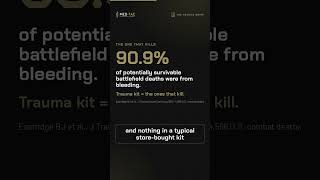
First Aid Kit vs. Trauma Kit: What Actually Stops Life-Threatening Bleeding
Why a standard first aid kit won't handle severe bleeding, and what four essentials belong in a trauma kit sized for your car, home, or workplace.

How Much Blood Loss Is Fatal? Hemorrhage Stages and Warning Signs
45-second primer on blood loss thresholds, the four stages of hemorrhage, and physiological warning signs before critical shock.

5 Tourniquet Mistakes from Viral Videos, Graded by a Physician
Physician breaks down five common tourniquet application errors found in online tutorials, grades them against military and civilian medical guidelines, and explains the single fix that addresses all of them.
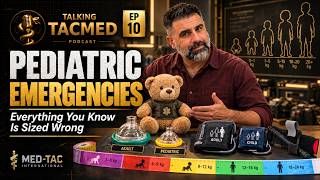
Pediatric Emergencies: Everything You Know Is Sized Wrong
How children's physiology differs from adults' in emergencies: three key facts, gear sizing, dosing by weight not age, and real-time scenario walkthrough of a playground injury.

Kitchen Knives and Power Tools: Bleeding Control at Home
Physician-led walkthrough of four realistic home-bleeding scenarios—kitchen knife, forearm laceration, table-saw finger loss, chainsaw thigh wound—with decision criteria, tourniquet technique, and what to keep in your home medical kit.
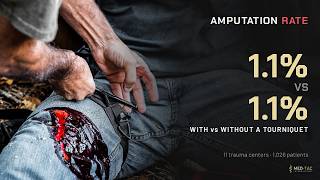
Do Tourniquets Cause Amputations? What the Evidence Actually Shows
Physician-led breakdown of tourniquet safety myth using military combat hospital and U.S. trauma center data: what the evidence shows about amputation risk and when time becomes the real problem.

How Long Can a Tourniquet Stay On? 1 Hour, 2 Hours, 6 Hours
Medical deep-dive on tourniquet application timing, physiology, and the difference between the two-hour conversion target and six-hour hospital threshold, with TCCC guidelines and civilian injury data.

Where Does a Tourniquet Actually Go? Both Answers Are Right
Physician-led walkthrough of tourniquet placement for bleeding control: hasty vs. deliberate application, why joints matter, and when to reposition—grounded in TCCC guidelines.
What Does Doc Say About Tourniquets?
Brief guidance on tourniquet training, application, and the importance of regular practice before an emergency.

No Tourniquets in the Forearm: Here's Why
One-minute explanation of why forearm tourniquets don't work and proper tourniquet placement for effective bleeding control.

Can a Properly Applied Tourniquet Hurt?
Short guide on tourniquet application safety, proper technique, and the importance of training and practice before an emergency.
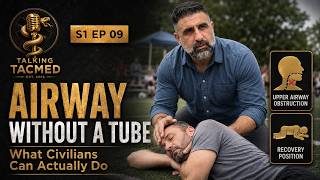
Talking TACMED S1 EP9 - Airway Without a Tube
Unconscious-patient airway management without advanced equipment: anatomy, obstruction recognition, and the four civilian interventions (head-tilt, jaw-thrust, recovery position, finger sweep).

Talking TACMED EP10 - Heat Casualties ARE Trauma Casualties!
Heat stroke is organ failure, not dehydration. Learn the core-temperature threshold where damage begins, how to recognize it, and the cooling hierarchy that matters in the first minutes.

Talking TACMED EP 08 - How to Triage 14 People in Three Minutes
Foundational walkthrough of START triage: the three physiological gates, four casualty categories, and a minute-by-minute protocol for sorting 14 patients before EMS arrives.

Why Your Car Kit May Be Wrong
How motor vehicle collisions differ from tactical scenarios, and five underrated items (~$60 total) your car emergency kit should include instead.

Chest Seals: What the Package Does Not Tell You
How to correctly apply vented chest seals to penetrating chest wounds: physiology, two critical application details, and entry/exit wound management.

Talking TACMED S1 EP5 – The MARCH Algorithm Is NOT a Checklist
Eleven minutes on the MARCH trauma-priority algorithm: what each letter means, the time-to-death math behind the ranking, and why civilian ABC training fails on a bleeding scene.

Equip Your Congregation to Save Lives: Medical Readiness Solutions
35-minute guide to organizing emergency medical response teams in congregations and community spaces, covering triage, casualty prioritization, and civilian first-responder readiness.

Talking TACMED S1 EP4 - The Bleed Control Hierarchy
Foundational guide to controlling bleeding in areas tourniquets cannot reach: direct pressure, wound packing, and pressure dressing techniques for neck, shoulder, groin, and torso wounds.

Why Most People Apply Tourniquets Wrong
Ten-minute breakdown of CAT tourniquet physiology, the three common application mistakes, and step-by-step correct technique under stress.

The Trauma Brief: Civilian Trauma Response Doctrine
Overview of TCCC framework and MARCH decision logic for civilian trauma response, with application chapters for parents, schools, workplaces, and remote operators.

The First 90 Seconds of an Emergency, and Why Most Civilians Freeze
Why bystanders freeze in medical emergencies and the neurological override you can rehearse at home to break through the freeze and act within the critical first 90 seconds.

Talking TACMED S1E1: What Tactical Medicine Actually Means (And What It Does Not)
Introduction to the three preventable causes of death before hospital arrival (uncontrolled bleeding, airway obstruction, tension pneumothorax) and the MARCH triage protocol for civilian emergency response.